Ivydene Gardens Adder's Tongue to Borage Wild Flower Families Gallery: |
This Site Map and Gallery is arranged differently to the others. You can find the wild flower in one of the 23 Wild Flower Galleries or the Colour Wheel Gallery if
Each plant named in each of the Wildflower Family Pages may have a link to its Plant Description Page in its Common Name in one of those Wildflower Plant Galleries and will have links to external sites to purchase the plant or seed in its Botanical Name, photos in its Flowering Months and habitat details in its Habitat Column. There are
|
|
When I have been searching the Internet for reliable good information on named plants, I have been constantly referred to data supplied by Paghat the Ratgirl on her website www.paghat.com/gardenhome.html :- |
The vision of the British Ecological Society is to advance ecology and make it count. The rarity of each plant as a wild plant in Britain is shown preceeding the Common Name in its Plant Description Page by the following star system:-
Wildflower Plant Family Pages without photos have their names prefixed by ivyg in the list below. |
Code of Conduct for the conservation and enjoyment of wild plants. The Botanical Society of the British Isles has some Distribution Maps of native Wildflowers. The BSBI Maps Scheme produces dot maps showing the distribution of vascular plants and charophytes in the British Isles, updated at weekly intervals. It was launched in 1950 and is now based on a ten-year cycle of recording, so the black dots at any point in time show only the records that have come in so far this decade. The Flora of Derbyshire contains information on over 1,700 species of plant growing wild across Derby and Derbyshire today. It covers flowering plants, trees, conifers, ferns and horsetails - all the so-called "vascular plants". Toxic Plant List from B & T World Seeds lists poisonous plants. The Poison Garden website originated from John Robertson's role as the first Poison Garden Warden at the Alnwick Garden.
The 15 plants killing our countryside:-
|
Nurseries that grow and sell plants to the Public:- If a plant is detailed in its own page in this Gallery and it occurs in one of their catalogues, then it is noted as being available from that nursery in the Comments Section of that plant's description page.
British Wild Flower Plants ( Burlingham Gardens, 31 Main Road, North Burlingham, Norfolk. NR13 4TA. Tel/Fax: 01603 716615 email office@wildflowers.co.uk website http://www.wildflowers.co.uk) is a family-run nursery started in 1986. They currently stock nearly 400 species of native plants.
BritishFlora (Grange Farm, Widmer End, High Wycombe, Bucks. HP15 6AE. Tel 01494 718203 Fax 01494 718989 Email: info@britishflora.co.uk website www.britishflora.co.uk ) is the leading provider of horticultural solutions to civil engineering problems encountered in major conservation, environmental, remediation, translocation and renewal schemes in habitats as diverse as highways, business parks, landfill sites, nature reserves, and the banks of tidal estuaries, rivers, canals, lakes and ponds as well as heath and salt marshes. With over 300 species held in stock (PDF list of available plants available from their Wildflower and Aquatic Plants Page of the Products and Services Section), they produce over 5 million native wild flower and aquatic plants including 1 million reeds annually. |
|


UKButterflies Larval Foodplants website page lists the larval foodplants used by British butterflies. The name of each foodplant links to a Google search. An indication of whether the foodplant is a primary or secondary food source is also given. Please note that the Butterfly you see for only a short time has grown up on plants as an egg, caterpillar and chrysalis for up to 11 months, before becoming a butterfly. If the plants that they live on during that time are removed, or sprayed with herbicide, then you will not see the butterfly. |
Sewage Pollution in the UK rivers and its surrounding Seas:- This is being ignored by the UK Government, Local UK Government and Commerce, so again they will do nothing about this, and continue to ignore the death of the wildlife, marine life, the dairy, farming and fishing industries, together with the onland and ocean producers of oxygen during 2024. Why not visit the UK and add your excrement to the increase of 102% of raw sewage spills into rivers and the seas in 2023 from 2022, while 240,000 new homes will be built each year without the future Labour or Conservative government stopping their excrement being offloaded into the sea to affect all the other countries surrounding us. If 92% of the seagrass has been smothered that means nowhere round the UK is either safe to swim in or for its fish and other marine life. The same could be said about the farmed salmon in the seas round Scotland. Ocean Pollution as reported by the Marine Conservation Society Marine pollution is diverse, from tiny fibres which shed from clothes, to chemicals washed down the sink. Pollutants, including plastic, chemicals and bacteria travel from our towns and cities to our seas, as well as from activities directly in our ocean. If we don’t tackle pollution at source, these highly persistent chemicals and plastics will continue to increase in our ocean causing untold damage. That's where we come in.
------
Marine Conservation Society - Seagrass: The ocean superhero at risk from sewage:-Seagrass meadows are a key player in helping to combat climate change – but untreated sewage pollution in our seas is threatening their future. Seagrass meadows are the Swiss army knife of marine habitats. They create hotspots for biodiversity and provide vital nursery habitats for various fish species. Long seagrass blades buffer wave energy, protecting our shores against coastal erosion and storms. Their canopies slow the flow of water, drawing down suspended matter like pollutants and excess nutrients from the water column and burying it in the sediment below. This also makes them one of the oldest and most effective carbon storage technologies, accounting for an estimated 10-18% of ocean carbon storage while occupying only 0.1% of the seafloor. Unlike terrestrial habitats like forests, seagrass doesn't release the carbon it has captured back into the atmosphere when it decomposes. If undisturbed, seagrass can store carbon for thousands of years. Seagrasses do a lot of heavy lifting in mitigating the stress that we inflict on the ocean. As ecosystem engineers, they’re skilled at adapting their environment to suit their needs. However, the flow of untreated sewage discharges into UK seas is posing a problem for seagrass. Untreated sewage discharges contain excess nutrients and pathogens, which encourage faster-growing macroalgae which reduce light availability and epiphytic algae which smother the seagrass leaves. Research by Cardiff University and Swansea University indicates that insufficient monitoring and management of sewage and wastewater treatment threatens seagrass meadows around the UK. Each of the 11 sites sampled in the study, ten of which were within marine protected areas, contained seagrass that was contaminated by nutrients “of a human and livestock waste origin”. The findings show that sewage pollution is a stressor to seagrass – one whose effects are far-reaching and continues to have an impact far from its source. The only effective way to protect seagrass and the whole marine environment from this stress is to tackle the issue at source. We have already lost 92% of seagrass meadows in the UK, and their survival and recovery is further undermined by poor water quality. However, we can reverse this trend. Removing stressors, such as untreated sewage pollution, is the most important factor in allowing seagrass to recover and we have seen seagrass successfully recolonise areas which were previously wiped out by sewage outfall. Our seagrass meadows are an essential ally against global warming, a biodiversity crisis, and pervasive pollution. These superhero habitats need our help and a first major step towards this is to stop releasing untreated sewage into our seas.
|
|||||||
Plants used by the Butterflies follow the Plants used by the Egg, Caterpillar and Chrysalis as stated in |
||||||||
Plant Name |
Butterfly Name |
Egg/ Caterpillar/ Chrysalis/ Butterfly |
Plant Usage |
Plant Usage Months |
||||
Egg, |
1 egg under leaf. |
10 days in May-June |
||||||
Egg, |
Eggs laid in batches encircling the branch of the food plant. |
Hatches after 18-22 days in April. |
||||||
Egg, |
Groups of eggs on upper side of leaf. |
- |
||||||
Egg, |
1 egg at base of plant. |
Late August-April |
||||||
Egg, |
Groups of eggs on upper side of leaf. |
- |
||||||
Egg, |
1 egg laid on underside of leaflets or bracts. |
7 days in June. |
||||||
Egg, |
1 egg laid on underside of leaflets or bracts. |
7 days in June. |
||||||
Egg, |
1 egg laid under the leaf or on top of the flower. |
7 days in August. |
||||||
Egg, |
1 egg on underside of a flower bud on its stalk. |
7 days. |
||||||
Egg, |
1 egg on underside of a flower bud on its stalk. |
7 days. |
||||||
Egg, |
1 egg under leaf. |
10 days in May-June. |
||||||
Egg, |
1 egg on leaf. |
2 weeks |
||||||
Cabbages - Large White eats all cruciferous plants, such as cabbages, mustard, turnips, radishes, cresses, nasturtiums, wild mignonette and dyer's weed |
Egg,
|
40-100 eggs on both surfaces of leaf. |
May-June and August-Early September. 4.5-17 days. |
|||||
Egg, |
1 egg on underside of leaf. |
May-June and August. 7 days. |
||||||
Cabbages:- |
Egg, |
1 egg on underside of leaf. |
July or August; hatches in 3 days. |
|||||
Cabbages:- |
Egg, |
1 egg laid in the tight buds and flowers. |
May-June 7 days. |
|||||
Cherry with |
Egg, |
Eggs laid in batches encircling the branch of the food plant. |
Hatches after 18-22 days in April. |
|||||
Egg, |
Groups of eggs on upper side of leaf. |
- |
||||||
Egg, |
1 egg on leaf. |
10 days in May-June. |
||||||
Egg, |
1 egg on leaf. |
6 days in May-June. |
||||||
Egg, |
1 egg under leaf. |
|
||||||
|
(Common CowWheat, Field CowWheat) |
Egg, |
Eggs laid in batches on the under side of the leaves. |
Hatches after 16 days in June. |
|||||
Currants |
Egg, |
Groups of eggs on upper side of leaf. |
|
|||||
Egg, |
Eggs laid in batches on the under side of the leaves. |
Hatches after 20 days in July. |
||||||
Dog Violet with |
Egg, |
1 egg on oak or pine tree trunk |
15 days in July. |
|||||
Dog Violet with |
Egg, |
1 egg on leaf or stem. |
Hatches after 15 days in May-June. |
|||||
Dog Violet with |
Egg, |
1 egg on leaf or stem. |
Hatches after 10 days in May-June. |
|||||
Egg, |
1 egg on underside of a flower bud on its stalk. |
7 days. |
||||||
Egg, |
Eggs laid in batches encircling the branch of the food plant. |
Hatches after 18-22 days in April. |
||||||
False Brome is a grass (Wood Brome, Wood False-brome and Slender False-brome) |
Egg, |
1 egg under leaf. |
... |
|||||
Egg, |
Eggs laid in batches on the under side of the leaves. |
Hatches after 20 days in July. |
||||||
Egg, |
1 egg laid on underside of leaflets or bracts. |
7 days in June. |
||||||
Egg, |
1 egg on leaf or stem. |
Hatches after 10 days in May-June. |
||||||
Egg, |
1 egg on underside of a flower bud on its stalk. |
7 days. |
||||||
Egg, |
1 egg laid under the leaf or on top of the flower. |
7 days in August. |
||||||
Egg, |
1 egg on leaf. 5 or 6 eggs may be deposited by separate females on one leaf. |
14 days in July-August. |
||||||
Egg, |
1 egg on underside of a flower bud on its stalk. |
7 days. |
||||||
Egg, |
1 egg laid in the tight buds and flowers. |
May-June 7 days. |
||||||
Egg, |
Eggs laid in batches on the under side of the leaves. |
Hatches after 20 days in July. |
||||||
Egg, |
Groups of eggs on upper side of leaf. |
|
||||||
Egg, |
1 egg under leaf. |
1 then |
||||||
Egg, |
1 egg on underside of a flower bud on its stalk. |
7 days. |
||||||
Egg, |
1 egg at base of plant. |
Late August-April. |
||||||
Egg, |
1 egg on leaf. |
10 days in May-June. |
||||||
Egg, |
1 egg on leaf. |
2 weeks |
||||||
Egg, |
1 egg on leaf. |
6 days in May-June. |
||||||
Egg, |
1 egg on underside of leaf. |
May-June and August. 7 days. |
||||||
Egg, |
1 egg on leaf. 5 or 6 eggs may be deposited by separate females on one leaf. |
14 days in July-August. |
||||||
Narrow-leaved Plantain (Ribwort Plantain) |
Egg, |
Eggs laid in batches on the under side of the leaves. |
Hatches after 16 days in June. |
|||||
Narrow-leaved Plantain (Ribwort Plantain) |
Egg, |
Eggs laid in batches on the under side of the leaves. |
Hatches after 16 days in June. |
|||||
Nasturtium from Gardens |
Egg, |
1 egg on underside of leaf. |
May-June and August. 7 days. |
|||||
Egg, |
1 egg on tree trunk |
15 days in July. |
||||||
Mountain pansy, |
Egg, Chrysalis |
1 egg laid under the leaf or on top of the flower. |
7 days in August. 3 weeks in September |
|||||
Egg, |
1 egg on tree trunk. |
15 days in July. |
||||||
Egg, |
Eggs laid in batches on the under side of the leaves. |
Hatches after 20 days in July. |
||||||
Egg, |
Eggs laid in batches encircling the branch of the food plant. |
Hatches after 18-22 days in April. |
||||||
Egg, |
Groups of eggs on upper side of leaf. |
- |
||||||
Egg, |
1 egg under leaf. |
|
||||||
Egg, |
1 egg laid under the leaf or on top of the flower. |
7 days in August. |
||||||
Egg, |
Eggs laid in batches encircling the branch of the food plant. |
Hatches after 18-22 days in April. |
||||||
Egg, |
Eggs laid in batches on the under side of the leaves. |
Hatches after 16 days in June. |
||||||
Egg, |
1 egg on underside of a flower bud on its stalk. |
7 days. |
||||||
Egg, |
1 egg on underside of a flower bud on its stalk. |
7 days. |
||||||
Egg, |
Groups of eggs on upper side of leaf. |
|
||||||
Egg, |
1 egg under leaf. |
|
||||||
Egg, |
1 egg on leaf. |
2 weeks |
||||||
Trefoils 1, 2, 3 |
Egg, |
1 egg on leaf. |
6 days in May-June. |
|||||
Egg, |
Groups of eggs on upper side of leaf. |
- |
||||||
Egg, |
1 egg laid on underside of leaflets or bracts. |
7 days in June. |
||||||
Violets:- |
Egg, |
1 egg on underside of leaf or on stalk. |
July-August for 17 days. |
|||||
Violets:- |
Egg, |
1 egg on stem or stalk near plant base. |
July to hatch in 8 months in March. |
|||||
Egg, |
1 egg on leaf. |
2 weeks. |
||||||
Egg, |
Eggs laid in batches encircling the branch of the food plant. |
Hatches after 18-22 days in April. |
||||||
Egg, |
1 egg on leaf. 5 or 6 eggs may be deposited by separate females on one leaf. |
14 days in July-August. |
||||||
Willow |
Egg, |
Eggs laid in batches encircling the branch of the food plant. |
Hatches after 18-22 days in April. |
|||||
Egg, |
Eggs laid in batches on the under side of the leaves. |
Hatches after 20 days in July. |
||||||
Plants used by the Butterflies |
||||||||
Plant Name |
Butterfly Name |
Egg/ Caterpillar/ Chrysalis/ Butterfly |
Plant Usage |
Plant Usage Months |
||||
Asters |
Butterfly |
Eats nectar. |
|
|||||
Runner and Broad Beans in fields and gardens |
Butterfly |
Eats nectar |
April-June or July-September. |
|||||
Aubretia in gardens |
Butterfly |
Eats nectar |
May-June or August till killed by frost and damp in September-November |
|||||
Butterfly |
Eats sap exuding from trunk. |
April-Mid June and Mid July-Early September for second generation. |
||||||
Butterfly |
Eats nectar. |
20 days. |
||||||
Butterfly |
Eats nectar |
May-June |
||||||
Holly Blue |
Butterfly |
Eats nectar |
April-Mid June and Mid July-Early September for second generation. |
|||||
Butterfly |
Eats nectar. |
July-October. |
||||||
Buddleias |
Butterfly |
Eats nectar. |
July-October. |
|||||
Wood White |
Butterfly |
Eats nectar |
May-June. |
|||||
Cabbage and cabbages in fields |
Butterfly |
Eats nectar |
April-June or July-September. |
|||||
Butterfly |
Eats nectar |
July-October |
||||||
Adonis Blue |
Butterfly |
Eats nectar. |
1 Month during Mid-May to Mid-June or during August-September |
|||||
Pale Clouded Yellow |
Butterfly |
Eats nectar |
May-June or August till killed by frost and damp in September-November |
|||||
Cow-wheat |
Butterfly |
Eats nectar |
June-July |
|||||
Butterfly |
Eats nectar |
May-June |
||||||
Butterfly |
Eats nectar |
April-Mid June and Mid July-Early September for second generation. |
||||||
Butterfly |
Eats nectar. |
3 weeks between May and September |
||||||
Germander Speedwell (Veronica chamaedrys - Birdseye Speedwell) |
Butterfly |
Eats nectar |
June-July |
|||||
Butterfly |
Eats nectar. |
July-October. |
||||||
Butterfly |
Eats nectar |
30 days in May-June. |
||||||
Butterfly |
Eats nectar |
May-September |
||||||
Butterfly |
Eats nectar. |
May-June for 18 days. |
||||||
Butterfly |
Eats nectar. |
July-October |
||||||
Butterfly |
Eats nectar. |
1 Month. |
||||||
Butterfly |
Eats nectar. |
July-October. |
||||||
Painted Lady |
Butterfly |
Eats nectar |
July-October. |
|||||
Marigolds in gardens |
Butterfly |
Eats nectar |
May-June or August till killed by frost and damp in September-November |
|||||
Butterfly |
Eats nectar. |
1 Month during Mid-May to Mid-June or during August-September. |
||||||
Michaelmas Daisies |
Butterfly |
Eats nectar. |
July-October |
|||||
Butterfly |
Eats nectar |
April-June or July-September. |
||||||
Narrow-leaved Plantain (Ribwort Plantain) |
Butterfly |
Eats nectar |
June-July |
|||||
Nasturtiums in gardens |
Butterfly |
Eats nectar |
April-June or July-September |
|||||
Butterfly |
Eats sap exuding from trunk. |
April-Mid June and Mid July-Early September for second generation. |
||||||
Butterfly |
Eats nectar |
June. |
||||||
Butterfly |
Eats nectar |
May-June. |
||||||
Butterfly |
Eats nectar |
July-October. |
||||||
Butterfly |
Eats nectar |
July-May |
||||||
Butterfly |
Eats nectar |
7 weeks in July-August. |
||||||
Comma |
Butterfly |
Eats nectar. |
July-October. |
|||||
Butterfly |
Eats nectar. |
3 weeks between May and September |
||||||
Trefoils 1, 2, 3 |
Butterfly |
Eats nectar. |
1 Month during Mid-May to Mid-June or during August-September |
|||||
Butterfly |
Eats nectar. |
20 days in August. |
||||||
Butterfly |
Eats nectar |
June.
|
||||||
Butterfly |
Eats nectar |
June-July |
||||||
Apple/Pear/Cherry/Plum Fruit Tree Blossom in Spring |
Butterfly |
Eats Nectar |
April-May |
|||||
Rotten Fruit |
Butterfly |
Drinks juice |
July-September |
|||||
Tree sap and damaged ripe fruit, which are high in sugar |
Butterfly |
Hibernates inside hollow trees or outhouses until March. Eats sap or fruit juice until April. |
10 months in June-April |
|||||
Wild Flowers |
Large Skipper |
Butterfly |
Eats Nectar |
June-August |
||||
Links to the other Butterflies:- Black Hairstreak uses Blackthorn, Privet, Guelder Rose, and Wayfaring tree |
||||||||
THE LIFE AND DEATH OF A FLAILED CORNISH HEDGE
September 21st. Most of the survey mile closely flailed today along both sides of the road. End note, June 2008. I hear spring vetch has been officially recorded somewhere in West Cornwall and confirmed as a presence in the county, so perhaps I can be permitted to have seen it pre-1972 in the survey mile. I wonder where they found it? It's gone from hedges where it used to be, along with other scarcities and so-called scarcities that used to flourish in so many hedges unrecorded, before the flail arrived. I have given careful thought to including mention of some of the plants and butterflies. So little seems to be known of the species resident in Cornish hedges pre-flail that I realise some references may invite scepticism. I am a sceptic myself, so sympathise with the reaction; but I have concluded that, with a view to re-establishing vulnerable species, it needs to be known that they can with the right management safely and perpetually thrive in ordinary Cornish hedges. In future this knowledge could solve the increasingly difficult question of sufficient and suitable sites for sustainable wild flower and butterfly conservation - as long as it is a future in which the hedge-flail does not figure.
CHECK-LIST OF TYPES OF CORNISH HEDGE FLORA by Sarah Carter of Cornish Hedges Library:-
Titles of papers available on www.cornishhedges.co.uk:-
THE GUILD OF CORNISH HEDGERS is the non-profit-making organisation founded in 2002 to support the concern among traditional hedgers about poor standards of workmanship in Cornish hedging today. The Guild has raised public awareness of Cornwall's unique heritage of hedges and promoted free access to the Cornish Hedges Library, the only existing source of full and reliable written knowledge on Cornish hedges." |
||||||||
Topic |
Topic - Bulb Climber in |
Topic - Both native wildflowers and cultivated plants, with these
You know its Each plant in each WILD FLOWER FAMILY PAGE will have a link to:- |
|
All Flowers 53 with |
Plant Colour Wheel Uses Uses of Bedding |
Nursery of Nursery of Damage by Plants in Chilham Village - Pages Pavements of Funchal, Madeira Identity of Plants Ron and Christine Foord - 1036 photos only inserted so far - Garden Flowers - Start Page of each Gallery |
|
|
|
|||||||||||||||||||||||||||||||||||||||||||||||||||||||||||||||||||||||||||||
ADDER'S TONGUE TO BORAGE WILD FLOWER GALLERY |
GBIF makes available data that are shared by hundreds of data publishers from around the world. These data are shared according to the GBIF Data Use Agreement, which includes the provision that users of any data accessed through or retrieved via the GBIF Portal will always give credit to the original data publishers. What is the Global Biodiversity Information Facility? GBIF enables free and open access to biodiversity data online. We’re an international government-initiated and funded initiative focused on making biodiversity data available to all and anyone, for scientific research, conservation and sustainable development. GBIF provides three core services and products:
|
||||||||||||||||||||||||||||||||||||||||||||||||||||||||||||||||||||||||||||
WILD FLOWER GALLERY INDEX LINK TO WILDFLOWER PLANT DESCRIPTION PAGE Wildflower Garden Use page from Evergreen Perrennial Shape Gallery. FLOWER COLOUR SEED COLOUR BED PICTURES HABITAT TABLES See Explanation of Structure of this Website with User Guidelines to aid your use of this website. |
WILD FLOWER FAMILY
|
WILD FLOWER FAMILY
|
WILD FLOWER FAMILY
|
WILD FLOWER FAMILY
|
Wild About Britain is home to hundreds of thousands of pages about British wildlife, the Environment and the Great Outdoors; from birds, butterflies, fungi and trees to climate change, marine life, astronomy and the weather. We're also a huge online community with 35,000 members and more than 3 million unique visitors a year. World Atlas of Seagrasses by Edmund P. Green and Frederick T. Short - "a group of about sixty species of underwater marine flowering plants, grow in the shallow marine and estuary environments of all the world's continents except Antarctica. The primary food of animals such as manatees, dugongs, and green sea turtles, and critical habitat for thousands of other animal and plant species, seagrasses are also considered one of the most important shallow-marine ecosystems for humans, since they play an important role in fishery production. Though they are highly valuable ecologically and economically, many seagrass habitats around the world have been completely destroyed or are now in rapid decline. The World Atlas of Seagrasses is the first authoritative and comprehensive global synthesis of the distribution and status of this critical marine habitat. " Over 300 accounts of the Flora of the British Isles have been published in |
||||||||||||||||||||||||||||||||||||||||||||||||||||||||||||||||||||||||
Superceeded Wildflower Indices After clicking on the WILD FLOWER Common Name INDEX link to Wildflower Family Page; |
The process below provides a uniform method for
The following Extra Index of Wildflowers is created in the Borage Wildflower Gallery, to which the Wildflowers found in the above list will have that row entry copied to.
Having transferred the Extra Index row entry to the relevant Extra Index row for the same type of plant in a gallery below; then
|
||||||||||||||||||||||||||||||||||||||||||||||||||||||||||||||||||||||||||||
The English Flower Garden Design, Arrangement, and Plans |
|||||||||||||||||||||||||||||||||||||||||||||||||||||||||||||||||||||||||||||
KPR - Gardeners Club Slovakia:- "KPR was officially established in 2000 in Slovakia in Europe; however, we supply seeds and plants from all over the world since 1998. Our main object is focused on joining gardeners around the world from all fields of interests to create a big database of seeds and plants (Seeds and Plants Bank of KPR) from around the world. At present, we have 6 main branches (Slovakia, Czechia, Australia, India, Thailand, South Africa and Tanzania) and over 200 co-operators and seeds collectors all over the world. Nowadays we are able to collect and supply over 10 000 species of plants from all over the world. If you are looking for anything, you are at the right place! Although we do not have every plant in our collection yet, but we are expanding daily, step-by-step, seed-by-seed, plant by plant. We believe that soon we will be able to supply (almost) anything! For sale over 10 000 seeds and plants from all over the world - palms, cycads, exotic and frost tolerant shrubs and trees, succulents, carnivorous, annuals, perennials, ornamental grasses, vegetable, etc." "At present, we can collect seeds and plants on request (as well as parts of plants - for example bulbs, cuttings, meristematic tissues, pollen, etc.) from more than 4000 species of plants from 19 European countries. Now we collect in the following countries: Austria, Bulgaria, Czechia, Germany, Spain, Finland, Great Britain, Croatia, Hungary, Lithuania, Latvia, Montenegro, Macedonia, Poland, Portugal, Serbia, Russia, Slovenia, Slovakia. We prepare to collect in the following countries: Albania, Bosnia and Herzegovina, Belarus, Estonia, France, Switzerland, Italy, Kosovo, Norway, Sweden, Ukraine. We are able to collect all species in this area on your request. However, we do not collect protected species and species from the orchids (Orchidaceae). Since 2002, we supply a wide range of European plants annually to both domestic and foreign small gardeners as well as big gardeners' societies, pharmaceutical companies and for scientific research. The Vegetation season in Europe is from March to October. Seeds are usually harvested from August to September, and some species earlier. We provide a guarantee of 2 years for germination seeds. Seeds of some species are available throughout the year, but most of the species are collected on request. If you are searching for anything from Europe, you are at the right place! Contact us and inform yourself about stock availability, prices and terms of supplying. We are able to supply all plant parts as well - seeds, bulbs, cuttings, meristematic issues, pollen etc. We also grow many species in cultivation and supply these as seedlings or young plants for wholesale. If you require seedlings, your order should be placed before April, seeing that the seeds are sown in April."
Colin's virtual Herbarium - "I am Colin Ladyka, and I live in Regina, Saskatchewan, Canada. Native plants are my hobby.
Toxicity of Common Comfrey :-
The Botanical Society of Britain and Ireland – Founded in 1836 as the Botanical Society of London and welcomes both professional and amateur botanists. The society focuses on the study of botany in the British Isles. The British Bryological Society – For the study and conservation of mosses and liverworts worldwide. The British Lichen Society – The first society in the world entirely devoted to the study of lichens. The Natural History Society of Northumbria – Everything you might want to know about NHSN including details of their field meetings, lectures, and nature reserve. Common by Nature – James Common regularly writes about his botanical finds across Newcastle and Northumberland on his personal blog. Help Identifying Plants Online BSBI Plant Crib – Sections from BSBI’s ground-breaking publication make the identification of complex plant families much easier. NatureSpot – Perfect for beginners, this online resource hosts species accounts for many plants also found in the North East. Arable Plant Crib – A series of helpful crib sheets for the UK’s arable plants from the Colour in the Margins project (now ceased). Common’s Cribs – A new series of beginner-friendly crib sheets exploring the identification of various plant families and group.
Biopix is a collection of biological photos, primarily from Scandinavia. Biopix is used online by a wide range of students, teachers, researchers, photographers etc. The photos are used professionally in a large range of publications; the sale helps to cover the expenses.
|
|
Handbook of alien species in Europe
Herbaria@home, a ground-breaking new approach to digitising and documenting the archives of the UK's herbaria. This site provides a web-based method for documenting herbarium sheets. We welcome participation in the project, so please read more about the project and if you would like to help then get involved!
Ukwildflowers has lists of English Common Names with their Latin botanical name.
APHOTOFLORA
Since 1972 I (Leif Stridvall) have almost exclusively been working with Nikon 35 mm system cameras as photographic equipment. They have proved to be very reliable and have never let me down. I started with Nikkormat, later exchanging it for Nikon FA (had matrix metering) and ended up with Nikon 801 (had autofocus) adding Nikon F70 as a reserve camera. In 2001 I began shooting digitally, first with Nikon Coolpix 990 and a couple of years later Minolta Dimage 7Hi, both excellent cameras for close-up photography. However when Nikon last year released its digital system camera D70 at a very affordable price, giving me opportunity to use all my old lenses with their new camera model, I gave up 35 mm photography for good. Since many years I use as macro lens the very sharp Nikon 60/2,8 AF (many old photos are taken with Mikro-Nikkor 3,5/55, also an excellent lens for macro work but only with manual focusing). All my 35 mm photos are taken with slide film, before 1972 Agfacolor, from 1972 till 1991 Kodachrome 25 (very few with Kodachrome 64) and from 1992 onwards with my favourite film, Fuji Velvia, very sharp and contrasty. Slides have been scanned by a HP PhotoSmart S20 Photo Scanner at a fairly moderate resolution of 1200 dpi. Most photos have been slightly edited either in Ulead PhotoImpact or in Adobe Photoshop. Photos with filenames starting with 4 letters are shot with a digital camera (AAAAxxxx or BBBBxxxx indicate Nikon CoolPix 990, MINAxxx Minolta Dimage 7Hi and NIKAxxxx Nikon D70).
The Global Strategy for Plant Conservation grew out of the Convention on Biological Diversity and is being fed into government policy around the world. |
Bookreview of A.R. Clapham, T.G. Tutin et E.F. Warburg Flora of the British Isles. Second Edition. Cambridge University Press.
Ferns in Britain and Ireland - A guide to ferns, horsetails, clubmosses
Selected References from KingdomPlantae.net National Audubon Society Field Guide to North American Wildflowers, Niering and Olmstead Peterson Field Guides Eastern/Central Medicinal Plants, Steven Foster and James A. Duke Peterson Field Guides Edible Wild Plants, Lee Allen Peterson Stalking the Healthful Herbs, Euell Gibbons Identifying and Harvesting Edible and Medicinal Plants, Steve Brill The Encyclopedia of Edible Plants of North America, Francois Couplan, Ph.D. Tom Brown's Guide to Wild Edible and Medicinal Plants, Tom Brown, Jr. A Modern Herbal, Volume II, Mrs. M. Grieve Weeds, Alexander C Martin
---------
Database of Insects and their Food Plants from the Biological Records Centre:- This database is primarily a collation of published interactions between Great Britain 's invertebrate herbivores (insects and mites) and their host plants. There are also some interactions for the invertebrates closely associated with herbivores, such as predators, parasitoids, cleptoparasites and mutualists. DBIF contains about 47,000 interactions for roughly 9,300 invertebrate taxa (species, sub-species and forms) and 5,700 plant taxa (species, genera and broader groupings).
---------
Helping Earth's Sustainable Management with a Plant IT'S SO PRODUCTIVE! 1 acre of hemp = 1,000 gallons of methanol. In fact, Henry Ford's first car ran on hemp-methanol! - and at just a fraction of the cost of petroleum alternatives. Alternatives to coal, fuel oil, acetone, ethyl, tar pitch and creosote can be derived - from this one single plant! |
||||||||||||||||||||||||||||||||||||||||||||||||||||||||||||||||||||||||||
|
|
|
|
|
|
||||||||||||||||||||||||||||||||||||||||||||||||||||||||||||||||||||||||
The New Zealand Electronic Text Centre has under the Creative Commons Attribution-Share Alike 3.0 New Zealand Licence produced the following information from Chapter IX - Ferns for the Open Garden from The Cultivation of New Zealand Plants by L.Cockayne published by Whitcombe and Tombs Limited, 1923, Auckland:- Class 1.—Ferns requiring no shade in dry districts. Class 2.—Ferns requiring only the minimum amount of shade. Class 3.—Ferns requiring a moderate amount of shade. Class 4.—Ferns requiring a considerable amount of shade.
GrassBase - The Online World Grass Flora:- What is GrassBase?
A Vegetative Key to Grasses by Ellen McDouall from the Bristol Regional Environmental Records Centre. |
|
How www.discoverlife.org Works About Everyone can benefit in some way from a partnership with Discover Life. With our powerful integrated web tools, you can:
We are dedicated to improving education about the natural world, and therefore make our tools available for everyone, for free. You keep copyrights of your photographs and other information, you control how much or how little information you provide. We work constantly to improve our technology to make it easier to use."
What is The Threatened Plants Database
BackyardGardener.com:- This is no superficial overview. We have everything you need to learn, explore, and improve your gardening. We also provide every product imaginable to assist you in creating your beautiful home garden surroundings. Backyard Gardener has provided gardening information since 1996. We are a one stop informational site to help people understand their gardening needs. Backyard Gardener provides gardening plans and plant lists to enhance your gardening knowledge. We assist in providing the best gardening reference sites on the web with our own 'hands on' gardening information." |
|||||||||||||||||||||||||||||||||||||||||||||||||||||||||||||||||||||||||||
|
|||||||||||||||||||||||||||||||||||||||||||||||||||||||||||||||||||||||||||||
|
|||||||||||||||||||||||||||||||||||||||||||||||||||||||||||||||||||||||||||||
Monty Don. The Observer, Sunday 22 April 2001 "Weeds are the unwanted visitors which spoil our garden parties. But before you chuck them out, they can teach us a thing or two. There are other ways to deal with weeds:-
My weeds: Monty's list of garden horrors, most of which are detailed in this website - look by common name or botanical in the Cream and Brown Wild Flower Gallery Page menus above:-
|
|||||||||||||||||||||||||||||||||||||||||||||||||||||||||||||||||||||||||||||
|
Site design and content copyright ©May 2008. DISCLAIMER: Links to external sites are provided as a courtesy to visitors. Ivydene Horticultural Services are not responsible for the content and/or quality of external web sites linked from this site. |
|
|||||||||||||||||||||||||||||||||||||||||||||||||||||||||||||||||||||||||||
From Sarah Ravens Kitchen & Garden:- Wildflowers - Chalk and sand, freely-drained soil mix A wonderfully varied self-sowing wild flower mix for thin, poor, chalky or sandy soils to give your garden or field flowers right through the year and food for the birds and bees. To cover an area of 3m2
|
From Sarah Ravens Kitchen & Garden:- Wildflowers - Clay and rich loam soil mix There are two main things I want from my wildflower meadow –
That’s what you’ll get with this beautiful selection of my favourite easy and reliable perennial wild flowers. To cover an area of 3m2
Spring into Summer Flowering
Summer into Autumn Flowering
|
||||||||||||||||||||||||||||||||||||||||||||||||||||||||||||||||||||||||||||

Ivydene Gardens Water Fern to Yew Wild Flower Families Gallery: |
Only Wildflowers detailed in the following Wildflower Colour Pages |
|
|||||||||||||||
Jan |
Feb |
Mar |
Apr |
May |
Jun |
Jul |
Aug |
Sep |
Oct |
Nov |
Dec |
||||||
1 |
Blue |
||||||||||||||||
1 |
|||||||||||||||||
1 |
Cream |
||||||||||||||||
1 |
|||||||||||||||||
1 |
|||||||||||||||||
1 |
|||||||||||||||||
1 |
|||||||||||||||||
1 |
|||||||||||||||||
1 |
|||||||||||||||||
1 |
|||||||||||||||||
1 |
White A-D |
||||||||||||||||
1 Yellow |
|||||||||||||||||
1 |
|||||||||||||||||
1 |
|||||||||||||||||
1 |
|||||||||||||||||
1 |
Flowering plants of |
||||||||||||||||
1 |
Flowering plants of |
||||||||||||||||
From Annuals and Biennials chapter in Plants for Ground-cover by Graham Stuart Thomas - Gardens consultant to the National Trust. Published by J.M. Dent and Sons Ltd in 1970, Reprinted (with further revisions) 1990. ISBN 0-460-12609-1:- "I think there is a case to be considered for annuals and biennials in ground-cover schemes so long as they will sow themselves freely. |
||
Use |
Plant |
Comments |
Lawn and ground-cover under conifer trees |
Poa annua |
The needles under a cedar tree were weekly swept away and the grass, despite fertilizers, top dressing, re-seading and re-turfing, simply would not grow. The needles were left alone and within 12 months the area became self-sown with a close and permanent sward of Poa nnua. This little grass regenerates itself constantly so that it makes a lawn, though each plant has only a short life. |
Oxalis rosea |
This is highly successful in the shade of conifers or any other tree |
|
Cyclamen hederifolium |
This is a perennial, though sowing itself freely when suited and it is here because plants to grow under cedars and yews, somewhat away from the trunks, are very few. |
|
Temporary ground-cover under trees |
Tropaeolum or Eschscholtzia |
A sheet of 'Gleam' nasturtiums or eschscholtzia; both are free-flowering and easily pulled up, though like all annuals it may be a year or two later before all dispersed seeds have germinated. Silene armeria and Iberis amara are equally successful, with Sett Alyssum (Lobularia maritima) creating a dwarf ground-cover carpet in late summer. |
Ground-cover under trees with high rainfall |
Claytonia sibirica (Montia sibirica) |
This grows under trees where the grass is thin at high altitude and high rainfall. It covers the area - interpersed with primroses and Oxalia acetosella - with a mass of pinky-white stars a few inches (cms) above the ground. Claytonia perfoliata is an annual; it is usually classed as a weed but is excellent cover in cool, acid soil, but far less conspicuous in flower |
Streamsides, river banks and fringes of boggy ground |
Impatiens glandulifera (Impatiens roylei, Annual Balsam) |
It is a rapid colonizer because its seeds are ejected with some force from the ripe pods. It seeds with great abandon and grows to 72 (180) or more; its many pink flowers make a great show. |
Full sun and drier soils than by streamsides |
Angelica archangelica |
It very quickly produces great green heads in spring, ripening quickly, with the result that the ground is thickly covered with seedlings in late summer. Oenothera biennis (Evening Primrose) will colonize any sunny waste place and produce yellow blooms for weeks in the summer Lychnis coronaria is a prolific seeder with rosettes of silvery basal leaves. Erysimum linifolium (Wallflower) produces lilac flowers |
Plants that seed about with abandon |
|
|
|
|
|
From Appendix II Lists of plants for special conditions in Plants for Ground-cover by Graham Stuart Thomas - Gardens consultant to the National Trust. Published by J.M. Dent and Sons Ltd in 1970, Reprinted (with further revisions) 1990. ISBN 0-460-12609-1:- |
||
Plant |
Plant |
Plant |
1. Plants requiring lime-free soils
|
||
Arctostaphylos. |
Erica. |
Philesia. |
2. Plants which will thrive in limy soils
|
||
Acaena. |
Cotula. |
Paeonia. |
3. Plants which tolerate clay.
|
||
Acanthus. |
Euonymus fortunei. |
Rodgersia. |
4. Plants which will grow satisfactorily in dry, shady places. Apart from ill-drained clay, this combination of conditions is the most difficult to cope with in the garden. * indicates those which will not tolerate lime. |
||
Alchemilla conjuncta. |
Fragaria. |
Reynoutria. |
5. Plants which thrive on moist soils. Genera marked * are suitable for boggy positions. |
||
Ajuga. |
Cornus stolonifera. |
*Onoclea. |
6. Plants which grow well in shady positions. The bulk of these are woodland plants, growing well under shrubs and trees, but those marked * are not so satisfactory under trees, though thriving in the shade given by buildings. For those requiring lime-free soil, compare with List 1. |
||
Adiantum. |
Carex. |
Epigaea. |
Helxine. |
Onoclea. |
Shortia. |
7. Plants which will thrive in hot, sunny places on dry soils. Those marked * require lime-free soil. |
||
Acaena. |
Dimorphotheca. |
Lychnis coronaria. |
8. Plants which thrive in maritime districts. Many of the following will stand wind and salt-spray, particularly those marked *. Those marked ** will provide shelter for others and shelter is highly important in seaside gardening. For genera requiring, lime-free soil, compare with List 1. |
||
Acaena. |
Aubretia. |
Ceanothus. |
*Genista. |
Pulsatilla. |
*Sedum. |
9. Plants which create barriers. The following by their dense or prickly character will deter small animals and human beings as well as weeds. |
||
Arundinaria anceps. |
Mahonia japonica. |
|
10. Plants for town gardens. Genera marked * prefer acid soil; those marked £ will thrive in impoverished soils. Soil in towns is usually deficient in humus. |
||
£Acanthus. |
Euonymus. |
Ribes. |
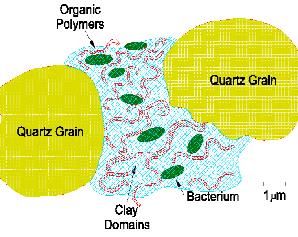
EXPLAINATION OF WHY SOIL IN UK TOWNS IS USUALLY DEFICIENT IN HUMUS.
Humus is dark, organic material that forms in soil when plant and animal matter decays.
The humus provides the organic polymers to interact with the clay domains and bacterium to stick the 2 grains of sand together. This soil molecule of 2 grains of sand, organic polymers, clay domains and bacterium will disintegrate by the action of the bacterium or fungal enymatic catalysis on the organic polymers. So if a continuous supply of humus is not present, then the soil molecules will break up into sand and clay. |
||
Cultural Needs of Plants "Understanding Fern Needs
Only Earthworms provide the tunnels which transport water, gas and nutrients to and from roots. When the roots of the plant requires the mineral nutrients dissolved in soil water, oxygen and nitrogen intake and waste gases output, it gets it through the action of the earthworm continously making tunnels to provide the transport system. |
||
11. Plants suitable for covering rose-beds. The following are all small plants that will not be strong-growing for the purpose, and will help to make the beds more attractive during the 7 months when Hybrid Teas and Floribundas are not in flower. Small spring-flowering bulbs can be grown through them. The more vigorous shrub roses will tolerate many others among the shorter growing plants in this 1000 ground cover table. |
||
Acaena. |
Cardamine trifolia. |
Primula auricula. |