|
|
|
|
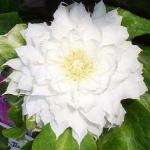
Flower. Photo from Roseland House Click on photo from Thorncroft Clematis |
Foliage |
Form |
|
Plant Name |
Clematis 'Duchess of Edinburgh' Early Large-Flowered Group (Syn. |
||
Grow in a Pot |
Grow to clothe a wall, arbour, trellis or pergola, but not in a pot. |
||
Soil |
Humus-rich Sand with Chalk |
||
Sun Aspect |
Full Sun or Part Shade |
||
Soil Moisture |
Dry |
||
Plant Type |
Deciduous Climber |
||
Height x Spread in inches (cms) |
60-144 x (150-360 x ) |
||
Foliage |
Mid Green |
||
Flower Colour in Month(s). Fruit |
"Medium to large, double and semi-double white flowers sometimes tinged green. Pale yellow to brown anthers. Early flowers are usually double, later flowers are semi-double. May, June, September " from Clematis on the Web. |
||
Comment |
"Fully double 5" flowers are produced on this compact vine in early and late summer. Suitable for containers. Early flowers may be touched with green. This can be a touchy Clematis to grow. " from Brushwood Nursery . Normally the foliage should be in the Sun while the roots are kept cool in the shade and moist. "All Clematis need a deep rich loam and they like lime. On thin soils, calcareous types included, they are a failure. Heavy clay is excellent if it is broken up and mixed with weathered ashes and leafmould. Dig the soil deeply and add plenty of old, well-rotted cow manure. The best time for planting is September and October, the preparation of the soil being done in the spring. The following March cut them back drastically to a bud within 6 inches (15 cms) of the base. This initial treatment of all types of Clematis encourages strong, healthy growth. Similarly, pinching out the tips of too vigorous shoots encourages them to branch and flower, but it should not be done later than June." from Climbing Plants and Some Wall Shrubs by Douglas Bartrum (Published by The Garden Book Club in 1968). Plant the top of the rootball about 3" (3 inches = 7.5 cms) below the soil surface to reduce risk of clematis wilt, and water well. "Best in a warmer aspect to avoid the flowers remaining green. Light pruning to tidy is all that is required." from Roseland House. Climbing Cultivation Group:- Group 2 Early to Mid-Season, large-flowered Clematis. Light Prune - Remove dead and damaged stems before growth begins in early spring and trim all remaining stems back to where strong buds are visible. These buds provide a framework of second-year shoots which, in turn, produce sideshoots that flower in late spring and early summer. The flowers may then be removed. Young shoots bear more flowers in mid and late summer at their tips. Grow to clothe a wall, arbour, trellis or pergola. Available from Kelways, Thorncroft Clematis and Roseland House Garden & Nursery in the UK with Brushwood Nursery in America. Photographs by Roseland House Garden & Nursery. |
||
Plant Associations |
White flowers on Clematis need a dark contrasting background to show off their flowers well; and nothing could be better than a closely-clipped, black-green Yew hedge. Train this climber on strong bamboo canes which are bent elliptically (each end fixed firmly into the soil) to form a 'wave' effect along the ground. Several rows can be used. A clematis trained in this way needs far more attention than it would do if it were grown on a chain-link fence panel against a wall. In this position it needs little pruning, but 'shaping' it over this elaborate support entails plenty of work. It will be advisable to have 2 plants of the same variety, one set at each end of a single row of bamboos. By keeping the main stem shorter (each plant will only to travel half the length of the framework) the Clematis will bloom more freely, the lower part of the stem being covered in flowers as well as the extreme end. |
||
|
|
|
|
Flowers |
Leaf. Photo from Roseland House |
Juvenile Foliage |
|
|
|
|
|
Flower Bud Closed |
Flower Bud Open |
Seed/Fruit |
|

CLEMATIS CLIMBER GALLERY PAGES Introduction CLIMBER FORM BED WITH CLIMBER PICTURES |
Climber Height from Text Border for the 3 height sectors on a house wall or high wall |
Blue = 0-36 inches (0-90 cms) for the Base Plants |
Green=36-120 inches (90-300 cms) |
Red = 120+ inches (300+ cms) for the Higher Reaches Plants |
CLIMBER FOLIAGE COLOUR CLIMBER INDEX - Climbers for all support areas except House Walls:-
See in the table in the middle of this page for further details about |
|||
Climber Soil Moisture from Text Background |
Wet Soil |
Moist Soil |
Dry Soil |
|||||
Further details of each use are available in:- |
||||||||
Flowering months range abreviates month to its first 3 letters (Apr-Jun is April, May and June). |
||||||||
Climber Name |
Flower Colour |
Flower Thumbnail |
Flowering Months |
Height x Width in inches (cms) - |
Climber Type and |
Comments |
||
Soft Violet-Purple |
|
August, September, |
144 x 144 (360 x 360) |
Twiner |
Flowers better if its roots are restricted. Poisonous if ingested. This plant is resistant to deer. |
|||
Creamy-White to Buff-Yellow |
July, August |
360 x 120 (900 x 300) |
Twiner |
Male / female Fuzzy Kiwifruit flowers occur on different plants and both sexes have to be planted closely for fruit set. |
||||
Deep Red-Purple |
|
March, April, May |
120 x 120 (300 x 300) in 5 years (360 inches - 900 cms - high eventually). |
Twiner |
Dark green above, blue-green below, tinged purple in winter. Pruning Group 11, after its spicily frag-rant flowers. |
|||
Greenish-White |
Seeds |
June, July, August |
180 x 144 (450 x 360) |
Twiner |
It is a major invasive plant species in parts of the Eastern United States spread by birds consuming the seeds. |
|||
Greenish-White |
June, July, August |
84 x 84 |
Twiner |
A neat and attractive climber useful for small gardens and pots. Any soil in sun or part shade |
||||
White |
|
August, September |
180 x 180 (450 x 450) |
Twiner |
The roots and leaves are edible - See Eat The Weeds. Hardy in the South of England, so train over a support on a wall or fence. |
|||
White and Pink |
Flower
Seed |
June, July, August |
240 x 180 (600 x 450) |
Twiner |
"This species is considered to be poisonous to livestock (e.g. cattle), domestic animals (e.g. poultry and dogs) and humans." from Weeds of Australia by Queensland Government. |
|||
Dark Coral-Red |
|
July, August, |
180 x 180 (450 x 450) |
Twiner |
Plants need support and look good scrambling over trellis or netting on a shady wall. I think it can withstand frost down to about -3C or -4C but no lower. |
|||
Pale Green |
|
July, August |
96 x 96 |
Twiner |
The blueberry is suited to warm sites or a conservatory. It is useful for areas where space is restricted. |
|||
Lime-Green |
|
July |
96 x 96 |
Twiner |
Grown on a house wall for its small evergreen leaves and for the ornamental berries, that are produced in the autumn and last long into the winter. |
|||
Red, Orange, Yellow |
|
May, June, July, |
180 x 72 (450 x 180) |
Twiner |
In frost-prone areas, grow in a cool greenhouse; elsewhere, use to clothe a pergola, arbour or house wall. |
|||
Salmon, Yellow, Green |
|
June, July, August |
96 x 72 |
Twiner |
The flowers in their cluster open sequentially so the entire plant is in flower for a long time. Red berries follow in autumn just before the entire plant dies down for the winter. |
|||
Red |
|
June, July, August |
96 x 72 |
Twiner |
Once it has flowered, it will go dormant below ground and reappear the following season |
|||
White with |
|
July, August |
120 x 120 (300 x 300) |
Scrambler |
Tips on growing Bougainvilleas in the UK from Cleeve Nursery. |
|||
Orange-Red |
|
August, September, |
240 x 240 (600 x 600) |
Rambler |
Pruning Group 12 in late winter. It may take 2 or 3 seasons to estab-lish the main framework; tie in the shoots onto a Trellis or Wire frame support system of a wall or chainlink fence. |
|||
Bright Red with |
|
August, September |
360 x 120 (900 x 300) |
Rambler |
Good against a non-house wall or up a support as a stand alone specimen. The stems self cling to walls as they produce arial roots that grip to surfaces. |
|||
Yellow |
August, September |
360 x 120 (900 x 300) |
Rambler |
Use on fences, arbors, trellises, walls. Also may be grown along the ground to camouflage rock piles or old tree stumps. Good vine for hot, dry sites. |
||||
Salmon-Red |
|
August, September |
360 x 120 (900 x 300) |
Rambler |
Support with Trellis or Wire frame onto a garden wall or fence. Can be grown through a tree. |
|||
Green |
|
June, July, August |
360 x 300 (900 x 750) |
Conservatory Twiner |
Pruning Group 11, in spring. Half-hardy - climber can withstand temperatures down to 0 degrees Centigrade. An excellent plant for a north facing wall |
|||
Clematis "All Clematis need a deep rich loam and they like lime. On thin soils, calcareous types included, they are a failure. Heavy clay is excellent if it is broken up and mixed with weathered ashes and leafmould. Dig the soil deeply and add plenty of old, well-rotted cow manure. The best time for planting is September and October, the preparation of the soil being done in the spring. The following March cut them back drastically to a bud within 6 inches (15 cms) of the base. This initial treatment of all types of Clematis encourages strong, healthy growth. Similarly, pinching out the tips of too vigorous shoots encourages them to branch and flower, but it should not be done later than June." from Climbing Plants and Some Wall Shrubs by Douglas Bartrum (Published by The Garden Book Club in 1968). Plant the top of the rootball about 3" (3 inches = 7.5 cms) below the soil surface to reduce risk of clematis wilt, and water well.
Climbing Cultivation Group:-
The International Clematis Society was formed in 1984 by Raymond Evison. The membership now covers 27 countries, providing the world-wide interest and appeal for this fascinating genus. Members come from many different cultures - from China and Japan, from Poland, Latvia and Estonia, from Germany, Great Britain and Sweden, from Australia, USA and Canada, making the Society truly international. In December 2015 the following mail-order nurseries sold some of these Clematis:-
|
||||||||
|
Group 1 |
White |
|
March, April, May |
204-276 x 192 |
Twiner |
Note that some forms of armandii may be toxic to animals, especially dogs. Requires shelter from cold winds. |
||
|
Group 1 |
White with |
|
December, January, February, March |
120-144 x 60 (300-360 x 150) |
Twiner |
Evergreen foliage which turns to bronze or purple in the winter months. Flowers with Lemon-scented fragrance. |
||
|
Group 3 |
Violet-Blue |
|
May, June, July, |
60-120 x 36 (150-300 x 90) |
Twiner |
Grow marsh clematis through shrubs, on trellises or in damp areas by ponds or streams |
||
Clematis x Group 3 |
Purple-Blue |
|
June, July, |
60-84 x 36 (150-210 x 90) |
Herbaceous |
Very good for growing through more delicate shrubs as it is easy to remove the prunings without damaging the host. |
||
|
Group 3 |
White |
|
July, August, September, |
240 x 36 (600 x 90) |
Twiner |
Plant near a patio or deck and enjoy its fresh fragrance!The lower parts of the stem are bare, so a lavender in front of it would be suitable to hide this bareness. |
||
Clematis florida |
White with |
|
June, July, August, |
84 x 36 |
Twiner |
A mature plant of it climbs into a tree and sends down long streams of its unique paired flowers. |
||
Clematis |
Blue |
|
April, May |
72-120 x 36-72 (180-300 x 90-180) |
Twiner |
The Rosa 'Marechal Niel' (yellow) is mostly grown on walls. It is a fine companion for some of the deep purple-flowered Clematis. The plants do best on walls facing west. |
||
Clematis |
||||||||
Clematis 'Asao' |
Pink |
|
May, June, |
84-120 x 36 (210-300 x 90) |
Twiner |
The foiage often takes on a bronzy color. After first flowering with its strong sweet scent; it can be cut back, fed and watered to get a good second show. |
||
Clematis |
Red or |
|
May, June, July, |
78-120 x 36 (195-300 x 90) |
Twiner |
Named after the raiser's secretary in 1949 and it belongs to the Clematis patens (patens means spreading: the epithet refers to the wide-spreading sepals of the flower) Group |
||
Clematis |
Mauve-Pink |
|
May, June, |
96-120 x 36 (240-300 x 90) |
Twiner |
Bees Jubilee is a compact plant that is suited for containers. It makes an excellent cut flower and the seedheads are beautiful too! |
||
Clematis |
Silvery-Mauve |
|
May, June, |
72-96 x 36 (180-240 x 90) |
Twiner |
Needs plenty of support for the heavy flowers but will grow in sun or shade. Light prune in the winter, stems can be reduced after first flowering at which time feed and water to get a good second show. |
||
Clematis |
White |
|
May, June, |
60-144 x (150-360 x ) |
Twiner |
Fully double 5" flowers are produced on this compact vine in early and late summer. Suitable for containers. Early flowers may be touched with green. |
||
Clematis |
Lavender Blue |
|
May, June, |
84-156 x 36 (210-390 x 90) |
Twiner |
It booms profusely and is very vigorous. Clematis of the Month for May 2004. The variety has received the Royal Horticultural Society's Award of Garden Merit. |
||
Clematis |
Light |
|
May, June, July, August, |
96-120 x 36 (240-300 x 90) |
Twiner |
This Clematis of the Month is a dependable grower to 8'-10' (2.5-3m). It is ready to bloom early even if it has been heavily cut back, and able to keep the flowers coming over many weeks. |
||
Clematis |
Mauve |
|
May, June, |
72-120 x 12-36 (180-300 x 30-90) |
Twiner |
Planted in the shade, the blossoms last for weeks instead of days. When growing it against a north-facing wall or fence, paint the surface a light color to reflect sunlight back to the plant. |
||
Clematis 'Niobe' |
Rich Deep Red |
|
May, June, July, August, |
96-120 x 36 (240-300 x 90) |
Twiner |
Awarded the Royal Horticultural Society's Award of Garden Merit in 1993. Niobe is a heavy bloomer from late spring to late summer. |
||
Clematis 'Piilu' The name means "little duckling" |
Light Purplish-Pink |
|
May, June, |
60-84 x 60 (150-210 x 150) |
Twiner |
Blooms top to bottom of plant. Early season blooms are double and later are single. Flowers heavily even on young plants. It is extremely winter hardy, to Zone 2 they say. |
||
Clematis |
||||||||
|
Group 3 |
Pink |
|
June, July, |
60-84 |
Herbaceous |
Awarded an RHS Award of Merit in 1995 and a British Clematis Society Certificate of Merit in 1998. Vigorous non-climber that bears handsome midsized bells over a long period. |
||
|
Group 3 |
Pale Blue marked with Blue-Purple veins |
|
July, August, |
60 x |
Non-Climber |
Grow through low shrubs but not in Pots. The tight group of stamens have white filaments and blue anthers making it look like it was dipped in blue paint! |
||
|
Group 3 |
Purple-blue |
|
June, July, |
60-84 x (150-210 x ) |
Herbaceous |
Grow in a Pot and in beds of bush roses, through open shrubs, small deciduous trees or obelisks. Clematis of the Month for August 2003 which details its companion plants. |
||
|
Group 3 |
Violet-Blue |
|
July, August, |
96 x 36 |
Twiner |
A heavy bloomer and sturdy grower, developed by Frank L. Skinner of Canada. Tough and resilient. |
||
|
Group 3 |
Violet-Blue fade to |
|
June, July, |
36-120 x 36 (90-300 x 90) |
Herbaceous |
It is tough and reliable; scramb-ling through low shrubs and herbaceous plantings. An excellent long lasting cut flower. |
||
Clematis |
||||||||
|
Group 3 |
Deep Blue fades |
|
July, August, |
120-168 x 36 (300-420 x 90) |
Twiner |
It has received the Royal Horticultural Society's Award of Garden Merit. Try growing it with a white or yellow rose! |
||
|
Group 3 |
Mauve |
|
July, August, |
120-168 x (300-420 x ) |
Twiner |
Bronze-flushed juvenile foliage becomes Light Green |
||
|
Group 3 |
Pale Blue with |
|
July, August, |
120-168 x (300-420 x |
Twiner |
Bred by Father Stefan Franczak of Poland, i: it is a hardy, sturdy grower, tolerant of a wide variety of conditions, as well as being a prolific bloomer. |
||
|
Group 2 |
Crimson red, |
|
July, August, |
108 x 36 (270 x 90) |
Twiner |
Grow with Shrubs and Roses or in Pots. Clematis of the Month for September 2000. |
||
|
Group 3 |
Pale Pink edged in |
|
July, August, |
78-96 x (195-240 x ) |
Twiner |
Very free flowering. Grow to clothe a wall, arbour, trellis or pergola. |
||
Clematis Group 3 |
Pink, strongly |
|
July, August, |
72-96 x 36 (180-240 x 90) |
Twiner |
Clematis of the Month is extraordinarily floriferous, tough and vigorous. Easily the most popular pink clematis. |
||
|
Group 3 |
Red-Pink with |
|
July, August, |
36-120 x (90-300 x ) |
Twiner |
Grow to clothe a wall, arbour, trellis, pergola or in a large pot. |
||
|
Group 3 |
Red-Purple |
|
June, July, |
120-180 x 12-36 (300-450 x 30-90) |
Twiner |
Suitable for pots if hard pruned, otherwise grow on Trellis. Ernest Markham - William Robinson's Head Gardener at Gravetye Manor in Sussex - was the author of books on clematis. |
||
|
Group 3 |
Deep Purple with |
|
July, August, |
120-168 x 36 (300-420 x 90) |
Twiner
Rosa 'New Dawn' |
The rich purple, 5 inch flowers appear in profusion in early summer and can keep coming all summer long! This is great on a trellis or grown in combination with New Dawn Climbing Rose. |
||
|
Group 3 |
Bright Red to |
|
July, August, |
96-204 x 36 (240-510 x 90) |
Twiner |
Best grown through an evergreen shrub, as lower foliage becomes scorched by late summer. Requires Group 3 pruning. |
||
Clematis montana - Montana means growing in mountainous places. Clematis montana varieties must be planted to climb a high tree or over a long veranda or a wall. They are not suitable for drastic 'shaping'. |
||||||||
|
Group 1 |
White |
|
April, May, |
360 x 96 (900 x 240) |
Twiner |
The Great Indian Clematis is fragrant. Very vigorous climber. |
||
Clematis montana grandiflora 'Alba' Group 1 |
White |
|
May, June |
252 x 252 (630 x 630) |
Twiner |
White Clematis is scented and a very vigorous climber, which is ideal for covering fences, garden walls and pergolas. |
||
Clematis montana Group 1 |
Pink double |
|
May, June |
240-360 x (600-900 x ) |
Twiner |
These climbers can cover an Arbour, the pink Clematis growing up one side and the purple-leaved Vine Vitis flexuosa parvifolia up the other. |
||
|
Group 1 |
Pink and paler Pink |
|
May, June |
276-396 x 120 |
Twiner with |
Vanilla-scented pale pink flowers in abundance in spring with some repeats in late summer. Rich dark foliage compliments the flowers and looks great all summer. |
||
Clematis montana var fasciculiflora Group 1 |
Bell-shaped Cream |
|
February, |
168-204 x (420-510 x ) |
Evergreen |
Flowers are carried in bunches (that's what the name means - flowers in bunches!) in March, they are sweetly scented. It has a habit of renewing it's leaves while flowering. |
||
Clematis tangutica |
||||||||
|
Group 3 |
Yellow |
|
July, August, September, |
168-204 x 96 (420-510 x 240) |
Twiner |
Excellent for training on a low wall - up one side and down the other. Or grow on a bush like Buddleia davidii, whose mauve flowers are at their best when the silky seed-heads of the Clematis begin to form. |
||
|
Group 3 |
Creamy-White |
|
July, August, September |
120-156 x (300-390 x ) |
Twiner |
Small, creamy white, outward facing flowers with red-purple stamens. |
||
Clematis |
||||||||
|
Group 3 |
Reddish-Pink |
|
July, August, |
120-156 x 36 (300-390 x 90) |
Twiner |
Very free-flowering. Wonderful colour and a prolific bloomer, easy and reliable. |
||
|
Group 3 |
White with Green-tipped tepals |
|
July, August, |
96-120 x 36-72 (240-300 x 90-180) |
Twiner |
Vigorous and free-flowering. The variety has received the Royal Horticultural Society's Award of Garden Merit. |
||
Clematis AVANT Group 3 |
Red with pale pink |
|
July, August, September, |
96-120 x (240-300 x ) |
Twiner |
Grow to clothe a wall, arbour, trellis or pergola. |
||
|
Group 3 |
Pink with darker |
|
July, August, |
120-144 x 36 (300-360 x 90) |
Twiner |
A 'Bal Maiden' was a female surface worker (usually a widow) in Cornish tin mines. Grow through small shrubs but not in pots. |
||
|
Group 3 |
Pinky-Blue or |
|
July, |
96-120 x 36 (240-300 x 90) |
Twiner |
"If I could only have one clematis in my garden this would unhesitatingly be my choice." |
||
|
Group 3 |
Dark Purple |
|
July, August, |
120-168 x (300-420 x ) |
Twiner |
These rich dark purple slightly nodding flowers are ideal for a free standing trellis, but they will also look striking blooming from a light colored shrub or conifer. |
||
|
Group 3 |
Deep Blue-Violet fades to |
|
July, August, |
120-168 x (300-420 x ) |
Twiner |
Full Sun with Any Aspect. Hard prune in spring, it will reach 3M. |
||
|
Group 3 |
Brick-Red |
|
July, August, |
120-168 x (300-420 x ) |
Twiner |
Full Sun or Part Shade, so grow through a medium height evergreen shrub. |
||
|
Group 3 |
Lilac-Purple with Creamy-White bar |
|
July, August, |
120-168 x (300-420 x ) |
Twiner |
Grow to clothe a wall, arbour, trellis or pergola. |
||
|
Group 3 |
Carmine to |
|
July, August, |
120-168 x (300-420 x ) |
Twiner |
Named 'Carmencita' because this clematis reminded Magnus Johnson of "dark-eyed Spanish beauties". Excellent on a stone wall or on an obelisk. |
||
|
Group 3 |
White with a |
|
July, August, |
96-120 x (240-300 x ) |
Twiner |
Named after the Cornish village where Mr Pridham has his nursery. Proving a good doer the shiny leaves are very mildew resistant. |
||
|
Group 3 |
Pearly-Blue with |
|
June, July, |
96-120 x (240-300 x ) |
Twiner |
A vigorous grower, it is best suited to growing up a sturdy obelisk in a large herbaceous border, or being trained to grow through a tree or shrub. |
||
|
Group 3 |
Rose-Purple |
|
July, August, |
120-168 x (300-420 x ) |
Twiner |
t is very free flowering and will grow in any aspect.Raised at Roseland House in 2006 and named in 2007 as a result of a naming competition run by Cornish Blind association and a percentage of the sale price is donated to them. |
||
|
Group 3 |
Violet-Blue with |
|
July, August, |
120-168 x (300-420 x ) |
Twiner |
Named after the raiser.. Grow to clothe a wall, arbour, trellis or pergola. |
||
|
Group 3 |
Purple-Blue with Creamy-White bar |
|
July, August, |
120-168 x (300-420 x ) |
Twiner |
Full Sun with Any Aspect. Grow to clothe a wall, arbour, trellis or pergola. |
||
|
Group 3 |
Blue-Violet with |
|
July, August, |
96-120 x (240-300 x ) |
Twiner |
Named after a Polish heroine, this hybrid is a robust and prolific bloomer, and is a great companion for roses or to grow through shrubs for mid-summer color. |
||
|
Group 3 |
Pinkish-Violet |
|
July, August, |
84-120 x (210-300 x ) |
Twiner |
One of six cultivars taking their names from an Estonian nursery rhyme :- |
||
|
Group 3 |
Bell-shaped |
|
July, August, September, |
96-120 x (240-300 x ) |
Twiner |
Flowers heavily right through the summer. It can be grown on a trellis, combined with roses or allowed to climb through shrubs. Easy and prolific. It can get mildew, do plant in a well-ventilated site. |
||
Clematis |
Deep Purple |
|
July, August, |
120-180 x 60 (300-450 x 150) |
Twiner |
If the top third is removed straight after flowering a second flush will occur with flowers well into autumn. It's difficult to sing the praises of Clematis 'Etoile Violette' too highly. |
||
|
Group 3 |
White |
|
June, July, |
96-120 x (240-300 x ) |
Twiner |
Discovered in Hagelby Park, Stockholm, and introduced in 1998 to celebrate the 10th anniversary of the Swedish Clematis Society. It was named after the village where Carl Linne had his summer house. |
||
|
Group 3 |
Reddish-Mauve |
|
July, August, |
96-120 x (240-300 x ) |
Twiner |
Grow it through a Goldheart Ivy which looks good in late summer. |
||
|
Group 3 |
Rosy-Mauve |
|
June, July, |
96-120 x (240-300 x ) |
Twiner |
Bred by Bill Baker of Tidmarsh, Herne, England and named after his wife. Hardy and moderately vigorous. |
||
|
Group 3 |
Blue-Mauve |
|
June, July, |
84-120 x (210-300 x ) |
Twiner |
Found in the garden of Ute Kruse, Luneberg, Germany. Named after the wife of Herr Biedenkopf, premier statesman of Saxony. |
||
Clematis Group 3 |
White or |
|
July, August, |
120-168 x (300-420 x ) |
Twiner |
It has four to six white petals that are diamond shaped with a hint of blue and purple at the tips. The flowers on long stems have green tips and a wide bell shape that flattens out as they open. |
||
Clematis 'Madame Group 3 |
Wine-Red |
|
July, August, |
96-120 x (240-300 x ) |
Twiner |
Extremely long flowering season if kept well fed and watered. 1 of the best and most popular reds. |
||
|
Group 3 |
Dark Purple-Red |
|
July, August, |
72-96 x (180-240 x ) |
Twiner |
Mikelite is a Lithuanian girl's name. This color looks particularly nice with white - try pairing it with Climbing Iceberg Rose. |
||
|
Group 3 |
Light Blue with |
|
June, July, |
120-156 x (300-390 x ) |
Twiner |
Grow to clothe a wall, arbour, trellis or pergola. |
||
|
Group 3 |
Reddish-Purple |
|
July, August, |
120 x |
Twiner |
Clematis Pendragon was named for King Arthur's family from the medieval legends. It sports dusky reddish purple flowers by the hundreds on a mature specimen. |
||
|
Group 3 |
Rose-Pink |
|
June, July, |
72-156 x (180-390 x ) |
Twiner |
Flowers are abundantly borne in summer and are fragrant. Mine leans against a Pieris japonica whose juvenile red foliage highlights the pink of the integrifolia. |
||
|
Group 3 |
White tinged Blue |
|
July, August, |
120-288 x (300-520 x ) |
Twiner |
A native of Portugal and Western Spain, it has the most dainty little bluey-white nodding bell-shaped flowers. This 'wild' clematis is worthy of space in our gardens. |
||
|
Group 3 |
Purple veined White |
|
July, August, |
84-168 x 36 (210-420 x 90) |
Twiner |
Very eye-catching. The variety has received the Royal Horticultural Society's Award of Garden Merit. |
||
|
Group 3 |
Soft Pink |
|
June, July, |
120-156 x (300-390 x ) |
Twiner |
Grow to clothe a wall, arbour, trellis or pergola. |
||
Two-lipped |
|
June, July, August |
360 x 360 (900 x 900) |
Conservatory
|
This vigorous vine is prized for its trumpet-shaped flowers, which last over a long season, and its glossy, dark, evergreen leaves. Climbs trellises and arbors by tendrils, though needs support for walls. |
|||
White or Yellow, |
|
June, |
144 x 144 (360 x 360) |
Herbaceous |
A brilliant rampant, climber which grows faster than any plant I know, to cover arches, tepees and walls before you can say Jack Robinson. |
|||
Fragrant, Creamy- |
|
June, July, |
120 x 120 (300 x 300) |
Evergreen Twining |
Good on south and west walls but in milder areas may be grown on fences and sheds. min temperature -10c. |
|||
Orange-Red |
|
May, June, July, |
120-180 x 120 |
Conservatory |
Outside for warmer areas, tie young shoots to sheltered South-Facing House-Wall Vine-eye and Wire or Trellis support system up to 6 feet. |
|||
Carmine-Red |
|
April, May, June, |
120-180 x 120 |
Conservatory |
Eccremocarpus scaber was introduced to the UK from Chile in 1824. Naturally orange flowered, many different coloured forms now exist. |
|||
Green or pale Purplish-Pink flower spikes |
|
February, March |
240-360 x 240 |
Evergreen Self-Clinger |
Tie in to a support until the adhesive roots become established and can support the mature plant. Use on Chainlink Fence or 1 inch square timber of trellis as support, but not advisable on external house walls. |
|||
Deep Yellow |
|
May, June |
240 x 144 (600 x 360) |
Rambling Shrub |
Pruning Group 13 when trained on a wall. |
|||
Fragrant, bright, |
|
April, May, |
120-240 x 180 |
Evergreen |
Pruning Group 12, after flowering. In frost-prone areas (minimum 0 degrees Centigrade) grow in a warm greenhouse or conservatory. |
|||
Bright red, |
|
July, |
72 x 12 |
Perennial |
Plant tubers 4 inches deep in a pot with mixture of John Innes No. 2 and added grit in the early spring inside the building with access to full sunlight. Put pot with its plant support system outside from late May to middle of September. |
|||
Yellowish-Green |
Flowers followed by fruits which are a very valuable winter food source for birds. |
October, |
144 x 96 (360 x 240) |
Self-Clinger |
Light Silvery-Green, variegated creamy White. Pruning Group 11. Suitable for sheltered wall, but not on a house wall as the climber can block guttering. |
|||
Yellowish-Green |
Use on sheltered wall, but not on a house wall as the climber can block guttering. |
October, |
180 x 60 (450 x 150) |
Self-Clinger |
The American Ivy Society is a non-profit organization dedicated to preserving the genus Hedera through education and promotion. |
|||
Yellowish-Green |
Use on sheltered South-facing wall, but not on a house wall as the climber can block guttering. |
October, |
72 x 72 |
Self-Clinger |
Foliage is Pale Green in Shade, bright Yellow in full sun. |
|||
Yellowish-Green |
Can also be used as ground cover or as a house-plant. |
October, |
72 x 72 |
Self-Clinger |
Foliage is Grey-Green variegated with Silver-Grey and Cream |
|||
Yellowish-Green |
Ideal as a houseplant or on a low wall. |
October, |
36 x 24 |
Self-Clinger |
Foliage is Grey-Green with broad Yellow margins. |
|||
Yellowish-Green |
Excellent wall ivy, but not on a house wall as the climber can block guttering. |
October, |
300 x 180 (750 x450) |
Self-Clinger |
Goldheart Ivy foliage is Dark Green, each with a central splash of bright Yellow. Tends to lose its variegation if grown as ground cover. |
|||
Yellowish-Green |
A tough, reliable and vigorous climber ideal for growing in sun or shade up a wall or fence. |
October, |
72 x 60 |
Self-Clinger |
An evergreen, self-supporting ivy with bold dark green leaves, the edges of which are beautifully rippled. |
|||
Yellowish-Green |
Useful and vigorous ground cover Ivy. |
October, |
360 x 180 (900 x 450) |
Self-Clinger |
Irish Ivy foliage is Dark Green. |
|||
Yellowish-Green |
Excellent all-round ivy for a low wall, as ground cover or as a houseplant. |
October, |
36 x 24 |
Self-Clinger |
Lustrous Dark Green foliage with wavy, curled and crimped margins. |
|||
Yellowish-Green |
This compact and slow-growing climber can be used as a houseplant or in a rock garden. |
October, |
12 x 12 |
Self-Clinger |
Grey-Green foliage, variegated creamy-White |
|||
White |
|
July, August |
600 x 240 (1500 x 600) |
Self-Clinger |
Dark Green foliage turning Yellow in Autumn. Pruning Group 11 after flowering. |
|||
IJ |
||||||||
Pinkish-Red |
|
May, June |
180 x 120 (450 x 300) |
Twiner |
Thin overcrowded growth after flowering. Grow over a garden but not a house wall. |
|||
White |
June, July, August, September |
480 x 180 (1200 x 450) |
Twiner |
Very striking grown through a deep green yew hedge or over a garden but not a house wall. |
||||
KL |
||||||||
White that ages |
|
June, July, August, |
360 x 180 (900 x 450) |
Twiner |
Japanese Honeysuckle is ideal for covering a pergola, arch or boundary wall, or scrambling through robust shrubs and trees. |
|||
White to Yellow, often Red-flushed |
|
July, August |
264 x indefinite (660 x indefinite) |
Twiner |
A tall Holly (like Green Pillar) has been used as a host tree to the charming rose Rosa bracteata (the "Macartney Rose"), which has white, scented flowers, 3 inches wide; and the common Honeysuckle of our hedgerows, Lonicera periclymenum, with yellowish-white and pink tubular flowers; both planted on the north side of the tree, in shade, and allowed to clamber up into the sun. |
|||
M |
||||||||
N |
||||||||
O |
||||||||
Green |
July |
840 x indefinite (2100 x indefinite) |
Self-Clinger |
Grow through a large tree or use to cover a wall or fence. Bright Green in Spring and Summer turning dark red-purple in the autumn. |
||||
Green |
July |
600 x indefinite (1500 x indefinite) |
Self-Clinger |
Mid Green in Spring and Summer turning brilliant red in the autumn. Mature specimens also provide an important habitat for insects and small birds. |
||||
White, sometimes Pink-tinged, with Purple, Blue and White-zoned coronas |
|
July, August, |
360 x 120 (900 x 300) |
Twiner |
Passio is spanish for passion and floris is flower. It is one of the finest climbers for a pot. |
|||
Q |
||||||||
R |
||||||||
Orange/Yellow |
|
December, January, |
240 x 240 (600 x 600) |
Conservatory |
A fast growing vine, with long trailing stems that stretch over 20 feet from the roots, and smother other plant life. |
|||
Lilac to Purple-Blue |
|
June |
240 x 60 (600 x 150) |
Scrambler |
Tie in stems of Chilean Potato Tree to horizontal wires or trellis. In early spring remove a third of the oldest stems to ground level. |
|||
Blue-White |
|
July, August, |
240 x 120 (600 x 300) |
Scrambler |
Train onto a South-facing wall |
|||
White |
|
July, August, |
240 x 120 (600 x 300) |
Scrambler |
Being Half-hardy to zero degrees centigrade indicates that it should be planted in June and removed after the first frosts in October. |
|||
Creamy-White ages to Yellow |
|
July, August |
240 x 120 (600 x 300) |
Twiner |
Frost Hardy to -5 degrees Cent-igrade, so put on South-facing wall. |
|||
White |
|
July, August |
336 x 144 (840 x 360) |
Twiner |
Glossy Dark Green turn Bronze-Red in Winter. Frost Hardy to -5 degrees Centigrade, so put on South-facing wall. |
|||
Orange to Yellow |
|
February, March, |
60 x 36 |
Twiner |
Dormant during the summer, starts growth in early autumn, and water sparingly in autumn and winter. |
|||
U |
||||||||
VW |
||||||||
Green |
July |
264 x 72 (660 x 180) |
Rambler |
Grow over a trellis, pergola, fence or South, East or West-facing house wall |
||||
Green |
--- |
July |
600 x 312 (1500 x 780) |
Rambler |
Performing best in full sun, it's ideal for covering an unsightly fence or wall or for scrambling through an established tree. |
|||
White |
May, June |
336 x indefinite (840 x indefinite) |
Twiner |
Japanese Wisteria can be trained onto a house wall, into a tree and over an arch or pergola. |
||||
Mauve to |
|
May, June |
336 x indefinite (840 x indefinite) |
Twiner |
Chinese Wisteria can be trained onto a house wall, into a tree and over an arch or pergola. |
|||
White |
|
May, June |
336 x indefinite (840 x indefinite) |
Twiner |
It can be trained onto a house wall, into a tree and over an arch or pergola. |
|||
XYZ |
||||||||
|
||||||||
|
Site design and content copyright ©April 2009. DISCLAIMER: Links to external sites are provided as a courtesy to visitors. Ivydene Horticultural Services are not responsible for the content and/or quality of external web sites linked from this site. The links were valid when created, but websites close and others change from insecure http to more secure https - this makes the http link invalid. |
|||||||
|
||||||||




Copied from Ivydene Gardens Clematis Climber Plant Gallery: |
There are further details on the Climber Page and the Pruning Page of the Plants Section. Clematis belong to the Buttercup Family (Ranunculaceae) but unlike that flower have no true petals. The spreading petal-like organs - often showy and beautifully coloured - are actually sepals: usually 4, but up to 8 in number. Botanists have divided the genus into 2 groups, viz:-
|
Growing Clematis Vines describes the different varieties of clematis cultivars and explains how to propagate, plant, prune and care for them. The British Clematis Society exists to promote the cultivation and preservation of clematis. Use their site to find out where you can see clematis or perhaps use its advice to help you get the most from your garden plants. A single species or one of the large-flowered varieties may be trained up wires fixed against the wall of the house; the semi-shady side is best. The supports must be thin, slender, wire-like, because Clematis are leaf-stalk tendril climbers. They cannot grasp thick branches. When the leaf-stalks make contact with a twig, they begin to curve round it like a ring. This movement is caused by the stimulus the stalks get, and they always curve towards the side which has touched or been pressed by the twig. Due to this requirement for thinness of support system, it might be easier for the Clematis to climb up Chain-link fencing rather than 1" square timber in 12" squares trellis. History of Clematis includes the name 'clematis', which is derived from the Greek word klema, meaning vine branch or vine-like. These gallery photographs were provided by Hawthornes, Roseland House & Nursery and some by Christine Foord (they were photographed by Christine and Ron Foord). |
Fragrant Flowers:- |
The Viticella group have been especially designed to suit the new-comer to growing clematis. They normally grow very well with a modicum of assistance and are virtually pest and disease free. The original specie comes from Southern Europe and is a variable purple in colour, the flowers are wide hanging bells produced in profusion. This character has been retained by all the hybrids. All grow to about 4 metres and can be hard pruned over the winter as is normally recommended . You may - if you wish - leave the stems longer especially if grown into a shrub. Try cutting the stems to different lengths which will increase the flowering height. None are fussy about aspect and flower about July or August for many weeks. The Viticellas Group, A to Z:- Details of the Horticultural classification system (this link no longer works in April 2024) for Clematis is in The International Clematis Register and Checklist 2002 Third Supplement for:- Small-Flowered Division - Flowers 2-12 cm (1-5 inches) across:-
and the Large-Flowered Division - Flowers 10-22 (4-9 inches) cms across, usually flat:-
|
Clematis which can be grown in a Pot:- |
Clematis with Royal Horticultural Society's Award of Garden Merit:- |
Evergreen Clematis:- |
Herbaceous Clematis:- |
Non-Climbing Clematis:- |
Clematis with Good Cut-Flower:- |
Clematis which are toxic to animals:- |
Clematis for small spaces by Raymond J. Evison:- The 150 clematis featured in this book are hand-picked for their longer flowering periods, large flowers and resistance to diseases. Internationally renowned clematis breeder Raymond Evison recommends the best clematis for particular situations, such as containers, mixed borders, patios, deck gardens, hanging baskets, and balconies. Clematis associate well with a variety of other plants and the author lists suitable companion plants and explains how to achieve a compatible mix of color, shape, and other characteristics. or An illustrated encyclopedia of clematis by Mary Toomey, Everett Leeds, British Clematis Society:- "With more than 800 Clematis species and cultivated varieties from which to choose, gardeners and growers have been inundated with options. Even more frustrating for some has been the absence of a single comprehensive reference with which to identify the numerous cultivars. This new volume, written by distinguished clematis experts and backed by the authority of the British Clematis Society, is the first picture encyclopedia on the genus to encompass the garden-worthy species and hybrids. |
"The time when most new clematis were introduced was more than a hundred years ago. This was in the period 1860-1880. It started with Jackman's crossing of C. lanuginosa with C. viticella to produce C. 'Jackmanii'. The size of the flower and profusion of the plant was a sensation. Nurseries set about producing clematis all over Europe. Then disaster struck. For centuries the fungus of clematis had been waiting for a decent meal. Suddenly there was clematis everywhere. The fungus set about them. There was devastation all over Europe. The nurseries abandoned clematis. By now clematis has made a dramatic recovery. This is due to better nursery hygiene, fungicides and better understanding of clematis wilt. This rarely kills a plant. Once this is understood the damaged stem can be cut off. The roots are alive and soon produce new stems. As the stems mature they turn brown and are immune to wilt. " from How New Clematis are Born (this link no longer works in April 2024). Perhaps it is best to plant the clematis with a foot (300mm) of soil above its compost top to the existing ground level (to allow for growth of extra root structure, so that if clematis wilt attacks the plant, it then has plenty of below ground reserves to create a new plant above ground), and at least 2 feet away from a wall (to get away from the dryness in the soil at the bottom of a wall) with a bamboo cane angled towards the support structure on that wall (to aid its method of attaching itself to support structures). |
"The Rogerson Clematis Collection was formed over a long period with an eye to preserving historic clematis as well as the newest. The collection includes plants that are unique or exceptionally rare. At approximately 500 taxa and just under 900 individual plants, it is one of the largest assemblage of clematis in the Western Hemisphere. Approximately 30% of the taxa in the collection are not currently available in the “trade.” Although a growing number of clematis are now easier to obtain by the general gardening public, and accurate information about them is increasingly available, the clematis in the Rogerson Collection are of singular value because they constitute a unique whole. The collection has a balance not found in private gardens nor in institutions of botanical learning because it embraces both the species and their cultivars and the more widely known race of large-flowered hybrids. “The specialist garden has always been of primary importance in preservation, from the standpoint of taxonomic and historical reference, in addition to basis conservation. The benefit we receive, as generalized horticulturists, from those who have committed their energies to a single genus is staggering.” Daniel J. Hinkley The collection is located at Luscher Farm in West Linn, Oregon (see map below), and is under the care of the Friends of the Rogerson Clematis Collection (FRCC). The mission of FRCC is to promote and advance the joy of growing the genus clematis through education and the preservation of the Rogerson Clematis Collection." from the Rogerson Clematis Collection in America. |
|
3 Sector Vertical Plant System from Infill3 Gallery The Gardener's Illustrated Encyclopedia of Climbers & Wall Shrubs - A guide to more than 2000 varieties including Roses, Clematis and Fruit Trees by Brian Davis. Published by Penguin Books Ltd. in 1990. ISBN 0-670-82929-3 is providing more climbers to add to the ones from Ramblers Scramblers & Twiners by Michael Jefferson-Brown (ISBN 0 - 7153 - 0942 - 0) which describes how to choose, plant and nurture over 500 high-performance climbing plants and wall shrubs, so that more can be made of your garden if you think not just laterally on the ground but use the vertical support structures including the house as well. Warning - Just as it is a mistake to try to keep a tiger in a dog's kennel, it can be a disaster to plant a rampant grower in a site that it will very quickly outgrow. Strong climbers, especially self-supporting ones (Ivy, Ampelopsis, Parthenocissus and Vitis), can quickly get to the eaves, where they may sabotage gutters, and if allowed to get onto the roof, distort or even dislodge tiling. Climbing roses must be supported by humans tying them to structures since the roses cannot do it themselves (keep the top of the structures 36 inches (90 cms) below the eaves so that annual pruning can reduce the risk of the odd stem reaching the guttering!! See Damage by Plants in Chilham Village - Pages 1, 2, 3, 4 ). There are 3 sectors on a house wall or high wall:-
The climbers in this gallery have been placed into one of these 3 heights with the Text Box Boundary in:-
This Gallery splits the climbers into their following ways of climbing:-
Climber 3 Sector Vertical Plant System Use Pages:-
Further details of each are available in Climber Gallery |
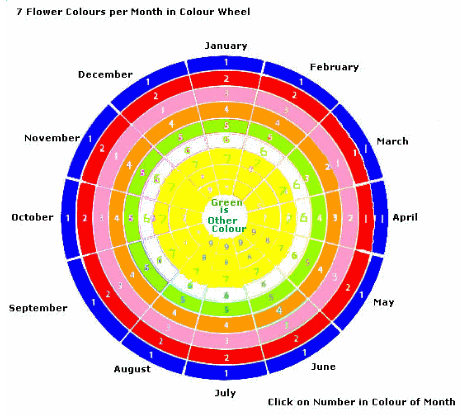
This plant gallery has thumbnail pictures of climber flowers in the following colours per month:-
If you click on a thumbnail the window changes to one with 9 larger images (Flower, Foliage and Form - for Flower, Foliage and Form pages) and the following plant description:-
|
Gardeners in the UK tend to weed their flower beds and are satisfied when it is weedless; with bare soil between the plants. Then, Unfortunately, there needs to be something for those plants to eat through the medium of being either dissolved or carried in water through tunnels created by worms to their roots. The water is usually rain, but sometimes the owners spray a lage amount of water as irrigation instead and still expect these plants to grow. The following steps might elucidate you, |
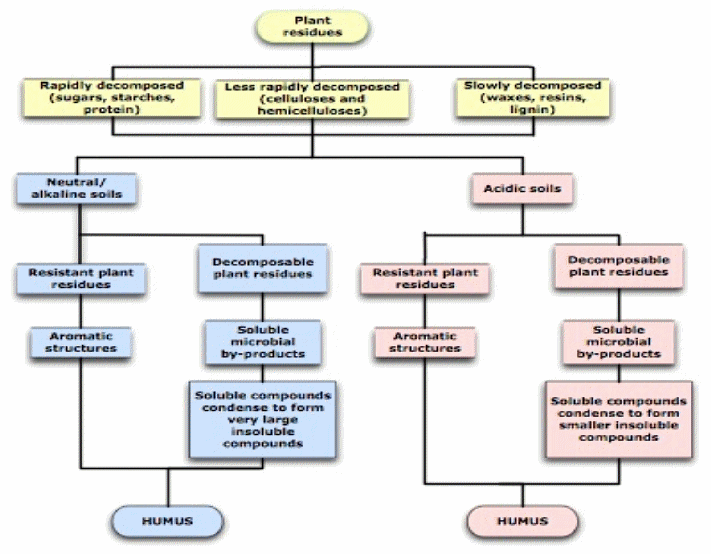
Step 1 - From How Soil is created with organic matter page:- "Rock fragments alone lack the ability to supply adequate quantities of water and nutrients. However, certain bacteria, fungi and plant species have evolved to live in these conditions and are called ‘primary colonizers’. Lichen can fix nitrogen from the atmosphere. Lichens are a mutually beneficial association between algae and fungi. The algae obtain carbon and in some cases nitrogen from the atmosphere using a combination of photosynthesis and nitrogen-fixation. Once their own carbon and nitrogen requirements have been met, surplus nutrients are then passed to the fungi. The fungi attack the rock with organic acids. This releases minerals for the algae. When these organisms die, their tissues become combined with the mineral material, so forming the first organic-matter additions to the soil. As the amount of soil organic matter increases it becomes possible for other plants ( which extract their nitrogen from soil, rather than atmospheric sources) to colonize the site." |
Step 2 - From Why is Organic matter important to soil? page "Soil Type (sand, chalk or clay) and whether it is alkaline or acidic (chalky or limefree) soil also affects the choice of plants as well as the choice of how to improve their health and vigour. |
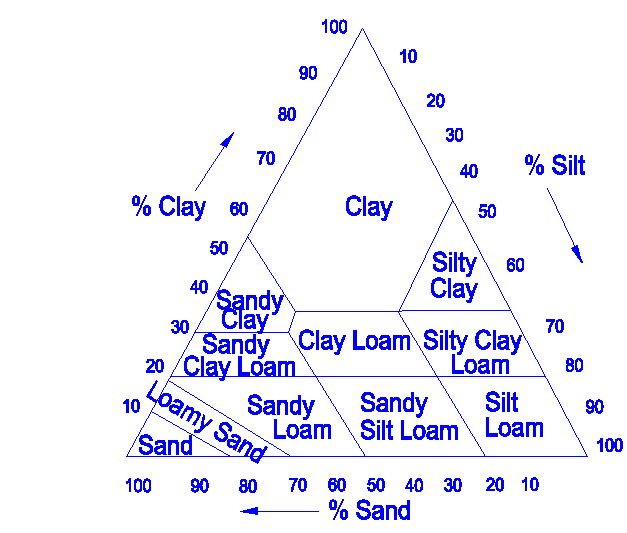
Step 3 - From In Soil formation - What is Soil Texture page Soil Texture The proportion of sand, silt and clay is referred to as its texture as shown in the diagram below. The gaps between the soil particles are called ‘soil pores’. These soil pores are used to provide the plants with water, air and nutrients dissolved in the water. The soil pores for sand (like the big gaps in a jumbled pile of bricks) are large and clay (like the small gaps in a loose pile of cement) pores are small.
Addition of Humus, Sand and Stone to improve the structure of Clay Soil The Soil - The most important element to consider, when starting a planting plan, is the soil. Soil provides anchorage for plant roots and holds the water/nutrients that are necessary for maintaining life. It is made up of the following elements:-
|
|
Step 3a continued When plants drop leaves, twigs, and other material to the ground, it piles up. This material is called leaf litter. When animals die, their remains add to the litter. Over time, all this litter decomposes. This means it decays, or breaks down, into its most basic chemical elements. Many of these chemicals are important nutrients for the soil and organisms that depend on soil for life, such as plants. The thick brown or black substance that remains after most of the organic litter has decomposed is called humus. Earthworms often help mix humus with minerals in the soil. Humus contains many useful nutrients for healthy soil. One of the most important is nitrogen. Nitrogen is a key nutrient for most plants. Agriculture depends on nitrogen and other nutrients found in humus. Some experts think humus makes soil more fertile. Others say humus helps prevent disease in plants and food crops. When humus is in soil, the soil will crumble. Air and water move easily through the loose soil, and oxygen can reach the roots of plants. Humus can be produced naturally or through a process called composting. When people compost, they collect decaying organic material, such as food and garden scraps, that will be turned into soil." from National Geographic.
Many gardeners in Britain, including those in the Royal Horticultural Society, tend to weed their beds, rake the ground level and leave that top soil fully exposed to the sun and wind. That means the humus content in the soil gradually disappears and your plants are not healthy, so along comes the chemical fertilizer (Growmore for the beds and Lawn fertilizer for the grass) and on it goes. The plants take up as much of this fertilizer as they want at that time before the fertilizer dissolved in water disappears down to the subsoil out of reach of the roots of that plant. Instead of destroying natures system in the garden, why not put the weeds and prunings on the lawn and mow them using a rotary mower. Then, with the collected vegetable/fruit peelings, the egg shells, used tea bags and coffee grounds from the kitchen applied on your flower beds before covering that kitchen waste with the grass/weed/prunings mowings to a depth of 1 inch (2.5 cms) to provide food to enter natures recycling system. If weeds are put on the lawn from your weeding the day before you mow them, they have a chance to dry out and die off. |
Step 3 continued
ACID and ALKALINE SOIL - Soil with a high lime or chalk content is alkaline. When lime is not present, it is neutral or acid. Peat is acid. Acidity and alkalinity is measured in terms of the soil's pH level. Neutral or nearly neutral (6.5-7.5) soils are ideal for most plants. At this pH level, nutrients are readily available. Some plants prefer alkaline soil and a few will only thrive in acid soils
The Soil Textural Triangle |
|
Types of Soil
Information in brackets in the 'Types of Soil' above comes from |
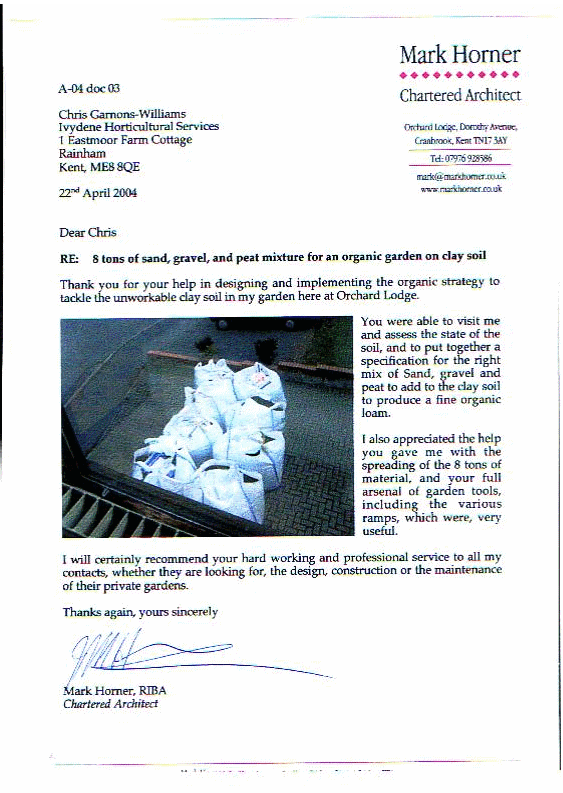
The climate in the South of England is temperate, with up to 20" of rainfall and a minimum temperature of 20-30 degrees Fahrenheit, and so require draught tolerant frost hardy plants. A 150mm deep mulch of mixed peat, sharp washed sand and horticultural grit was applied on top of a heavy clay soil to improve its structure, and stop the plants therein from drowning, at £10 a square metre. The mix was:
The following was then sent to me:- |
|
and the following was sent to me in October 2004:- An unsuccessful planting scheme had left bare areas of garden as plants failed to survive winter in the waterlogged clay soil. The loss of numerous plants and the cost of replacing them had left us disheartened. It was evident that remedial action was need in the form of a mixture of gravel, sand and peat to create an organic loam. Approximately six inches was added in April and left to settle and do its job. By July there was a noticeable difference in the quality of the soil and the plants. Shrubs with sparse, mottled leaves were looking glossy and robust, overall growth had increased (including the weeds!) and the soil was holding its moisture well. But the biggest difference came in the confidence it gave us to transform the garden. The borders used to be a no-go area between May and September as the clay baked and cracked, but the new soil was easy to handle and weeds could be successfully removed. We realised that there are no quick fixes - the key to a healthy garden is rich, nutritous soil. Once our plants began to thrive we were optimistic that, with good advice, we could create a garden to be proud of. |
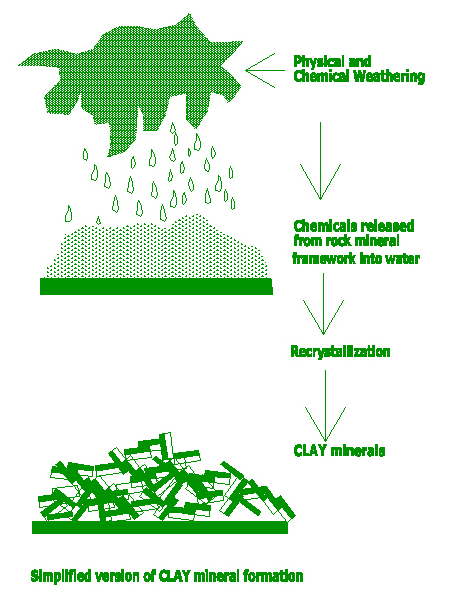
Step 4 - From How is Clay created Page
Sand and silt particles are largely unaltered by chemical weathering. They are chemically the same as the mineral material in the parent rock.
|
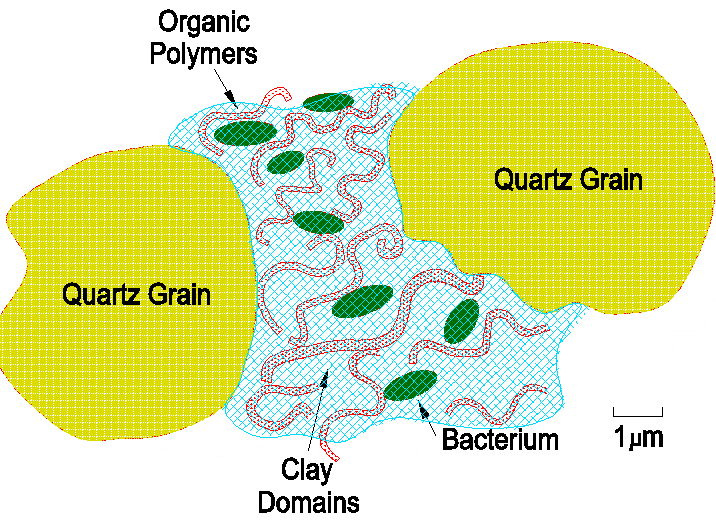
Step 5 - Soil Structure This describes the way in which sand, silt and clay particles are bonded together in larger units called ‘aggregates’. These are formed when the soil is subjected to shrinking and swelling, plant-root penetration or freezing. All these processes tend to break the soil into discrete units. Aggregates are said to be stable when they are able to resist pressures caused by processes such as compaction and sudden wetting. Rapid wetting is a process in breaking up unstable aggregates, because when dry aggregates are suddenly exposed to water, pores near the surface of the aggregate become filled with water, trapping air inside the aggregate; the resulting pressure can sometimes be enough to break the aggregate apart, and this is called ‘slaking’. Aggregates are divided into microaggregates (less than 250 millionths of a metre) and macroaggregates (greater than 250 millionths of a metre). Before microaggregates can form, microscopic clay minerals need to be grouped together in small stacks called ‘domains’. When clays are bonded together in this way, they are termed ‘flocculated’. The most important factor influencing flocculation is the presence of ions with more than 1 charge. When clay minerals are covered with singly charged ions they disperse and become deflocculated (i.e. they will absorb a great deal of water without it draining).
However, not all ions carry only 1 charge. For example, calcium (Ca2+) in lime or chalk, Magnesium (Mg2+) and aluminium (Al3+) are 3 very common ions in soils. Ions with multiple charges allow clay minerals to bond together to form domains. Once clay minerals are stacked together to form domains, they can then bond with organic matter to form microaggregates. |
The interaction between clay domains, organic matter, silt and sand particles diagram.
|
Step 6 - If the problem is a very Sandy Soil, then change the 2 cubic metres of Sharp Washed Sand in the above mixture for 2 cubic metres of Clay. Put the clay in the mixer first with 0.5 cubic metre of water to dissolve the clay. Then once the clay is liquefied, add the remaining ingredients except the peat and mix whilst still still keeping it liquid. Then add the peat and mix it in before filling the required transportation sacks. Transport these sacks as quickly as possible to their destination and mulch the ground with a 6 inch depth (15 cms) of this damp material. The ground should transform into a good loam within 4 months, providing that is not walked or driven on during that time. |